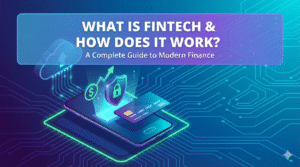




Not long ago, managing your money required a physical trip to a bank branch, a paper checkbook, and days of waiting for transactions to “clear.” Today, you can split a dinner bill, buy fractional shares of a company, or get an instant mortgage approval entirely from your smartphone. This shift is driven by one thing fintech.
But what is fintech and how does it work exactly? In this guide, we will pull back the curtain on the technology that powers your favorite financial apps and explore why this industry is fundamentally changing our relationship with money.
What is Fintech? Defining the Intersection of Finance and Tech
The term “fintech” is a portmanteau of “financial technology.” It refers to any software, mobile application, or cloud-based technology designed to improve and automate the delivery of financial services.
Initially, fintech referred to the back-end technology used by established banks. However, since the 2008 financial crisis, the definition has expanded to include consumer-focused startups and tech giants that challenge traditional banking models. Whether it is a digital wallet like Apple Pay or a crypto exchange like Coinbase, if it uses technology to move or manage money, it is fintech.
Why Fintech Exploded in the 2020s
The rapid growth of the fintech sector can be attributed to three factors: the ubiquity of smartphones, a consumer demand for frictionless experiences and a decline in trust in traditional big banks. People no longer want to wait for business hours to access their own capital.
How Does Fintech Work? The Engine Behind the App
Understanding how fintech works requires looking at the “plumbing” of the modern financial system. Fintech companies don’t usually act as isolated islands; they connect existing financial accounts to modern digital interfaces.To stay current on the latest shifts in this technology, you can follow our daily fintech news updates.
APIs The Bridge Between Your Bank and Your Apps
The most critical component of fintech is the API (Application Programming Interface). Think of an API as a digital messenger. When you link your bank account to a budgeting app like Rocket Money or a payment app like Venmo, an API securely carries the data from the bank to the app without requiring the app to “see” your password.
Artificial Intelligence and Big Data
Fintech relies heavily on AI to process massive amounts of data in milliseconds. For example, when you apply for a “Buy Now, Pay Later” (BNPL) service at checkout, AI algorithms analyze your creditworthiness instantly. This is a massive leap from traditional lending, which could take weeks of manual human review.
Blockchain and Decentralized Finance
Some of the most innovative fintechs utilize blockchain technology. By using a decentralized ledger, these platforms can facilitate near-instant cross-border payments without the need for an intermediary bank, significantly reducing fees and processing times.
The 5 Key Pillars of the Fintech Ecosystem
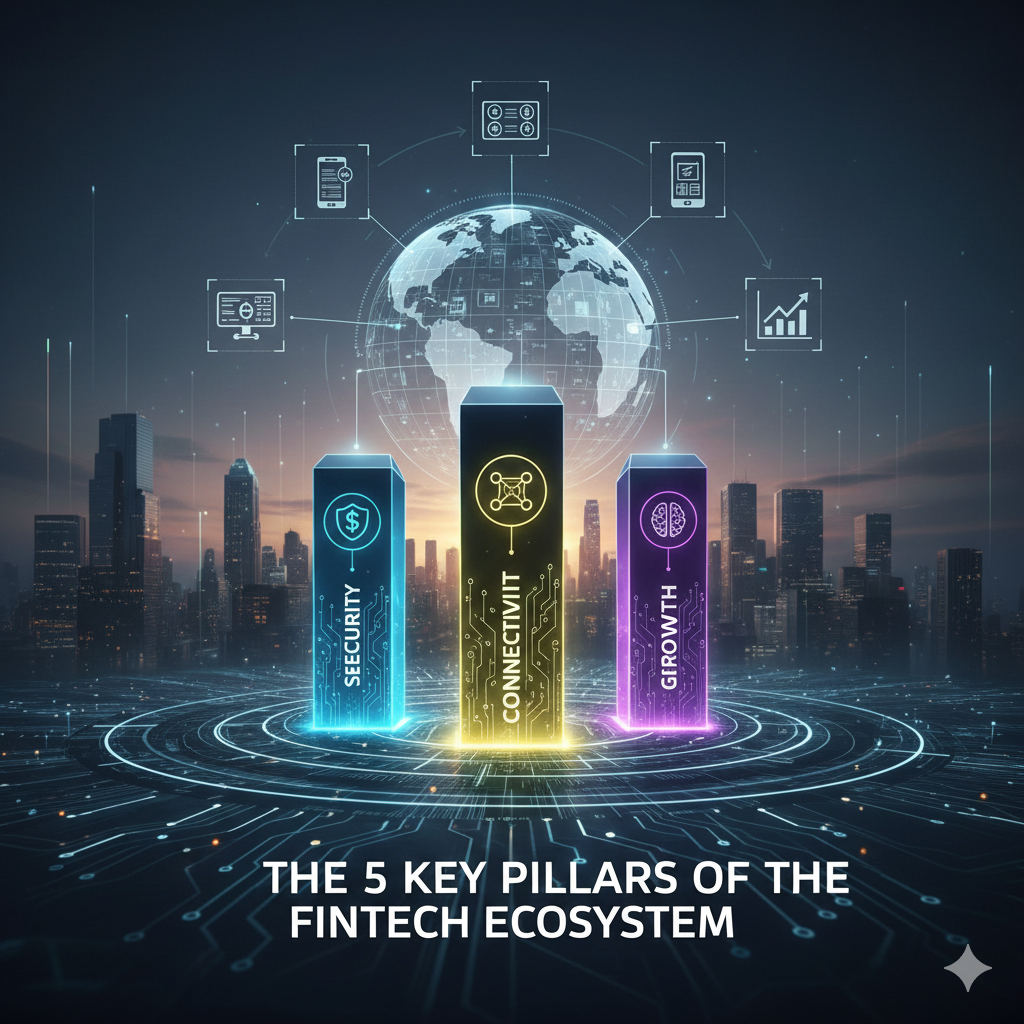
Fintech is not a monolith; it is a diverse ecosystem covering several specialized sectors.From neobanks to decentralized finance, the landscape is shifting daily. You can explore our deep dives into these specific industries in our Fintech Categories section.
- Digital Payments: Apps like PayPal, Square, and Venmo allow for the instant transfer of funds between individuals (P2P) and businesses (B2B).
- Lending: Platforms like SoFi or LendingClub use non-traditional data—like rent history or utility payments—to offer loans to people who might be rejected by traditional banks.
- Wealthtech: “Robo advisors” like Betterment use algorithms to manage investment portfolios, making professional wealth management accessible to those with as little as $5.
- Insurtech: Technology that simplifies the insurance process, using telematics or AI to provide more accurate, personalized premiums.
- Regtech: Short for “regulatory technology,” these tools help companies stay compliant with laws like the FTC Safeguards Rule or Anti Money Laundering (AML) requirements automatically.
Is Fintech Safe? Understanding Security and Regulation
A common concern for many users is whether their digital money is as safe as it would be in a vault. The answer lies in multi layered security protocols.
How Fintechs Protect Your Data
Most reputable fintech apps use end to end encryption and Multi Factor Authentication (MFA). Additionally, many fintechs partner with FDIC insured banks. This means that while the app provides the interface, your actual deposits are held by a bank that is government insured up to $250,000.
The Role of Regulation
In the United States, fintechs are overseen by various bodies, including the SEC (Securities and Exchange Commission) for investments and the CFPB (Consumer Financial Protection Bureau) for lending. These regulations ensure that fintech companies provide transparent terms and protect consumer privacy.To ensure your data is protected, companies must adhere to official guidelines from the Federal Trade Commission (FTC) regarding data privacy and security safeguards.
Fintech vs. Traditional Banking: What’s the Difference?
While traditional banks are increasingly adopting tech, there are core differences between them and “pure” fintech companies.
| Feature | Fintech Companies | Traditional Banks |
| Accessibility | 24/7 Mobile Access | Limited Business Hours |
| Speed | Near Instant | 1–3 Business Days |
| Fees | Low to None (SaaS Model) | Monthly Maintenance / Overdraft |
| Customer Base | Mobile first / Underbanked | Established / High Net Worth |
Conclusion
So, what is fintech and how does it work? At its core, it is the democratization of finance. By stripping away the overhead of physical buildings and manual paperwork, fintech makes it possible for anyone with a smartphone to save, invest, and borrow more efficiently than ever before.
As we move toward a future of open banking,the line between technology and finance will continue to blur, making our financial lives more integrated, invisible, and accessible.
FAQ Section
Is fintech the same as digital banking?
Not exactly. Digital banking is a service provided by a traditional bank, while fintech refers to the broader technology companies that innovate within the financial space.
Is my money insured in a fintech app?
In many cases, yes. Most fintech apps partner with FDIC-insured banks to hold your funds. Always check the app’s About section for FDIC disclosure.
How do fintech companies make money if they don’t charge fees?
Many fintechs earn money through interchange fees, a small cut from merchants when you use their card interest on cash balances or premium subscription tiers.
What is a Neobank?
A Neobank is a type of fintech that is a 100% digital bank with no physical branches. Examples include Chime and Varo.
Can fintech help my credit score?
Yes. Many fintech apps allow you to report rent and utility payments to credit bureaus, which can help build your score faster than traditional methods.