

The era of rushing to a bank branch before it closes at 4:00 PM is officially over. In the last few years, the American financial landscape has shifted from paper checks and physical vaults to high speed algorithms and mobile-first experiences. Understanding how digital banking is changing in the USA is no longer just for tech-savvy early adopters it is essential for anyone looking to maximize their financial health in a fast-moving economy.
The Neobank Revolution Why Digital Only is Winning
One of the most significant changes is the rise of the “Neobank.” Institutions like Chime, SoFi, and Ally have no physical branches, allowing them to slash overhead costs. These savings are passed directly to you through higher Annual Percentage Yields (APYs) on savings and fewer monthly maintenance fees. Recent data highlights that while 83% of Americans still hold a traditional account, over 42% now use a FinTech company for their daily needs.
AI and Hyper Personalization Your Phone as a Financial Coach
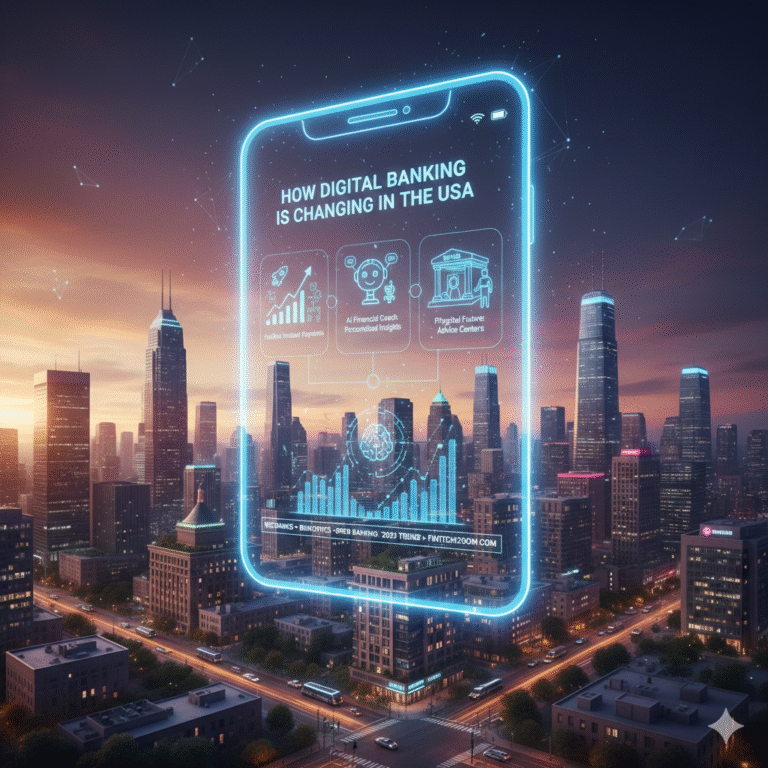
In 2025, your bank is becoming an active partner. Through Predictive AI, banks can now analyze your spending habits to offer hyper personalized advice. Imagine a banking app that alerts you when a subscription price increases or automatically moves money into a high yield bucket because it predicts a surplus in your checking account. According to research by PwC on 2025 banking trends, this transition to “agentic” workflows is the next frontier of operational efficiency.
The Death of the 3Day Wait FedNow and Real Time Payments
For decades, the U.S. lagged in payment speed. That changed with the full implementation of FedNow. This real time payment system allows money to move instantly between banks 24/7, even on weekends. How digital banking is changing in the USA in terms of liquidity is massive the FedNow network now connects over 1,400 financial institutions, ensuring that paychecks and transfers clear in seconds rather than days.
The Phygital Hybrid Reimagining the Local Bank Branch
Physical branches are being reinvented as “Advice Centers.” Many institutions are replacing traditional tellers with Interactive Teller Machines (ITMs), allowing for 24/7 video links with live representatives. This shift ensures that even as the world goes digital, the “human touch” remains available for life’s biggest financial decisions, such as mortgages or wealth management.
Security and the Future of Trust
Security has evolved beyond passwords toward biometric authentication and behavioral analytics. Your bank can now detect fraud based on your typical typing cadence or how you hold your phone.
To keep pace with these rapid shifts, it is vital to follow dedicated industry news. For the latest trends, you can follow FintechZoom Updates, which tracks the intersection of technology and finance. For a deeper look at generational shifts, Mastercard’s 2025 report details how Gen Z is driving these new security and transparency expectations.
Conclusion
The future of finance in America is intelligent, instant, and invisible. How digital banking is changing in the USA reflects a broader move toward a system that fits into your life rather than forcing you to work around its schedule.
FAQ Section
How is digital banking changing in the USA in 2025?
Digital banking is shifting from a transactional tool to a proactive financial partner. The biggest changes include the nationwide rollout of FedNow for instant transfers, the integration of Predictive AI to provide personalized financial coaching, and the rise of “phygital” branches that prioritize human advice over manual transactions.
Is digital only banking safe?
Yes, provided the institution is FDIC insured. Most reputable neobanks partner with traditional banks to provide this insurance. In 2025, safety is further enhanced by behavioral biometrics and AI driven fraud detection that monitors accounts 24/7 for unusual patterns.
What is FedNow and how does it benefit me?
FedNow is a real time payment infrastructure launched by the Federal Reserve. It allows money to move between bank accounts in seconds at any time of day, including weekends. For you, this means instant access to paychecks and the ability to pay bills on their due date without worrying about a 3 day processing delay.
Why are so many physical bank branches closing in the US?
Branches are closing because over 80% of Americans now prefer to perform daily tasks like deposits and transfers via mobile apps. To adapt, banks are shifting resources toward better digital interfaces and high tech “Advice Centers” for complex needs like home loans and small business consulting.
How do digital banks offer higher interest rates than traditional banks?
Digital banks (neobanks) operate without the massive overhead of physical real estate, utility bills, and large on site staff. By saving on these operational costs, they can offer much higher Annual Percentage Yields (APYs) on savings accounts to attract new customers.
What should I do if my digital bank account is hacked?
Immediately use your app to freeze your cards and change your login credentials. Contact the bank’s support team through their official secure channel. Because of the Electronic Fund Transfer Act (Regulation E), you are protected from liability for unauthorized transfers if you report them promptly.